




Carol Ann Tomlinson is Wiliam Clay Parrish, Jr. Professor and Chair of Educational Leadership, Foundations, and Policy at the University of Virginia's Curry School of Education where she is also Co-Director of the University's Institutes on Academic Diversity. Prior to joining the faculty at UVa, she was a teacher for 21 years. During that time, she taught students in high school, preschool, and middle school and also administered programs for struggling and advanced learners. She was Virginia's Teacher of the Year in 1974.

Kath Murdoch is an experienced teacher, author, university lecturer and popular consultant who has worked for many years in schools throughout Australia, New Zealand, Asia, America and Europe. She is widely respected for her work in the field of inquiry based learning and integrative curriculum in which she has taught, researched and published for well over 25 years.

Jim Knight has spent more than two decades studying professional learning, effective teaching, and instructional coaching. He is a Research Associate at the University of Kansas Center for Research on Learning and the President of the Instructional Coaching Group.

Dylan Wiliam is one of the world's leading authorities on the ways that assessment can be used to improve student learning and has authored or co-authored over 300 articles, books, and book chapters on education. After 7 years teaching English, mathematics and science in urban secondary schools in London, he joined Chelsea College,University of London, which later merged with King's College London. During his time at King's College London, he ran the mathematics teacher education programme, co-ordinated a large scale testing programme, served for five years as Dean of the School of Education and from 2001 to 2003, was Assistant Principal of the College.

Yong Zhao is a Foundation Distinguished Professor in the School of Education at the University of Kansas. He is also a professorial fellow at the Mitchell Institute for Health and Education Policy, Victoria University in Australia and Global Chair in Education at East China Normal University. He previously served as the Presidential Chair and Director of the Institute for Global and Online Education in the College of Education, University of Oregon, where he was also a Professor in the Department of Educational Measurement, Policy, and Leadership.

It’s funny. These days a lot of folks are calling me “Dr. Hammond” since the book has become required reading in many teacher education programs and school districts. Well, to set the record straight, I am not a PhD. I do have a Master’s degree, but I consider myself a “boots on the ground” teacher. I call myself a former writing teacher turned equity freedom fighter. My heart is forever with children and teachers in the classroom, not in an ivory tower, even if these days most of my “students” are new leaders and pre-service teachers. [A quick note:Not throwing any shade at all the PhDs out there doing the work.]

Dr. Rojas conducts professional training on effective programs and strategies for English learners from pre-school through grade 12 for ESL (EAL) and classroom teachers. She has worked with over 300 international schools on language education policies, programs, and instructional practices. Dr. Rojas specializes in developing academic English as an Additional Language (EAL) and in providing access for English learners through teacher collaboration and effective instructional practices for teaching English learners in mainstream classrooms. She provides professional development sessions, job-embedded coaching, demonstration lessons, and conducts linguistic audits of ESL/ EAL programs.

Ron Ritchhart spent years in the classroom as a teacher before joining Harvard Project Zero where he is now a Senior Research Associate. Over the past 16 years, Ron’s research has explored such issues as teaching for understanding, the development of intellectual character, creativity in teaching, and the development of thinking dispositions.

Jay McTighe brings a wealth of experience developed during a rich and varied career in education. He served as director of the Maryland Assessment Consortium, a state collaboration of school districts working together to develop and share formative performance assessments. Prior to this position, Jay was involved with school improvement projects at the Maryland State Department of Education where he helped lead Maryland’s standards-based reforms, including the development of performance-based statewide assessments.

Dr. Heidi Hayes Jacobs is internationally recognized for her seminal work in contemporary curriculum design, vertical mapping and modernizing responsive school environments. She prizes her work directly with schools in all settings of every kind, whether public, private, secular, sectarian, on-site, or virtual. Dr. Jacobs’s models on curriculum mapping world are the basis for software solutions used throughout the world.

Alfie Kohn is an American author and lecturer in the areas of education, parenting, and human behavior. He is a proponent of progressive education and has offered critiques of many traditional aspects of parenting, managing, and American society more generally, drawing in each case from social science research.
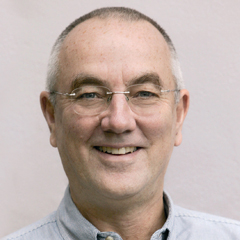
Guy Claxton is a cognitive scientist with a long-standing passion for bringing the mind sciences to bear on the improvement of schools. His main research interest is in the expandability of human intelligence in all its forms:intellectual, practical, social, emotional and spiritual.

Thomas R. Guskey is Professor Emeritus in the College of Education at the University of Kentucky where he served as Department Chair, Head of the Educational Psychology Area Committee, and President of the Faculty Council. He has been a Visiting Professor at ten universities in the U.S. and a Visiting Scholar at universities in Australia, Canada, and New Zealand. A graduate of the University of Chicago, he began his career in education as a middle school teacher, served as an administrator in the Chicago Public Schools, and was the first director of the Center for the Improvement of Teaching and Learning, a national research center.

I have learned one thing for certain during more than thirty years of experience leading Student Voice and Aspirations work:nothing is constant. At least this is true in regard to the actual implementation of our work and the organizational structure upon which it is based. Without doubt, the mission itself has always never waned.
Child centred learning has been Anne's passion for more than 25 years. Anne has worked in schools in the Netherlands, China, Singapore and Switzerland, where she took on various positions such as team leader, PYP coordinator and director. Anne used to work at the Canadian International School (Singapore) where she was part of the team that took the school to IB authorisation Anne has been an IB workshop leader since 2005, sharing her passion for young children and play with educators in international schools.

Bena Kallick, Ph.D is the Co-Founder and Co-Director of Institute for Habits of Mind and Program Advisor for Eduplanet21. She is a well known consultant providing services to school districts, state departments of education, professional organizations, and public agencies throughout the United States and abroad.

Stephanie Harvey has spent the past forty two years teaching and learning about reading and writing. She received her BA from the University of Denver and her MA from the University of Colorado. After sixteen years of regular elementary and special education teaching in the Jefferson County Schools in Lakewood, Colorado, Stephanie became a staff developer forthe Denver based Public Education and Business Coalition (PEBC), a partnership of leaders from education and business who support innovation in public schools.

Kathy Collins works in schools and presents in conferences all over the world to support teachers in developing high-quality, effective literacy instruction in the early childhood settings through middle school. She is the co-author, along with Janine Bempechat of Not This But That:No More Mindless Homework (Heinemann, 2017). She co-authored, with Matt Glover, I Am Reading:Nurture Meaning-Making and Joyful Engagement with Texts (Heinemann, 2015). Kathy's other books include Reading for Real:Teach Children to Read With Power, Intention, and Joy in K-3 Classrooms (Stenhouse, 2008) and Growing Readers:Units of Study in Primary Classrooms (Stenhouse, 2004). Kathy has worked closely with the Teachers College Reading and Writing Project at Columbia University, and she taught in Brooklyn, New York. Kathy and her family live in Durham, New Hampshire.

Matt Glover has been an educator for over 30 years, as a teacher, a principal, author and consultant. He is the author and co-author of several books on teaching writing and reading including Projecting Possibilities for Writers.

Dan Feigelson has worked extensively in New York City schools as a teacher, staff developer, curriculum writer, principal, and local superintendent. An early member of the Teachers College Reading and Writing Project, he leads institutes, workshops and lab-sites around the world on the teaching of reading and writing.

Carl Anderson is an internationally recognized expert in writing instruction for Grades K-8, working as a consultant in schools and districts around the world. A long-time Staff Developer for the Teachers College Reading and Writing Project, Carl is the author of numerous books on teaching writing, including the bestselling How’s It Going? A Practical Guide to Conferring with Student Writers, Assessing Writers and A Teacher’s Guide to Writing Conferences.
Jessica Martin is a former classroom teacher, Resident Advisor at University of California at Los Angeles Teacher Education Program, staff developer at Teachers College Reading and Writing Project, Columbia University, and CEO of the education consulting organizationat Growing Educators.

Ralph Fletcher has been a mentor to teachers and young writers everywhere. He frequently works with young writers in schools, and speaks at education conferences in the US and abroad, helping teachers find wiser ways of teaching writing. Ralph is the author of many bestselling teacher professional books including Writing Workshop: The Essential Guide; Craft Lessons; What a Writer Needs, 2nd edition; and Boy Writers: Reclaiming Their Voices.His most recent professional books include Joy Write: Cultivating High-Impact Low-Stakes Writing (April 2017) and The Writing Teacher’s Companion: Embracing Choice, Voice, Purpose and Play (July 2017).

Dr. Towanda Harris is currently the Director of Professional Learning and an adjunct professor of reading and writing and brings over twenty years of experience to the education world. Towanda is the author of The Right Tools: A Guide to Selecting, Evaluating, and Implementing Classroom Resources and Practices. Educators rely on her wisdom about how to find resources that meet their teaching goals and match their understanding of their students’ needs.

Mark Church works with schools throughout the world wishing to create cultures of thinking in their classrooms. He believes in the difference teachers can make for students when they strive to make thinking visible, valued, and actively promoted as part of the day-to-day experience of their learners. Mark encourages teachers to become students of their students, and more broadly, students of themselves and the choices they make to leverage the power of making thinking visible.
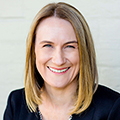
Fiona Zinn is an Education Consultant based in Australia. Drawing on 25 years experience in the early childhood, primary and tertiary sectors, Fiona works with educators around the world to boldly re-imagine early years pedagogy, curriculum and learning environments in response to research. Much of this work finds resonance with the educational project of Reggio Emilia but is also shaped by interpretation and experience across a wide range of contexts.
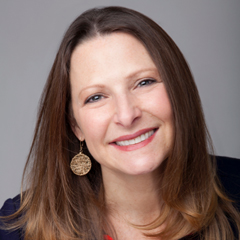
Kimberly, author of Experience Inquiry, is an internationally-recognized speaker on student-driven learning and inquiry-based instruction. Her workshops and videos are well-known throughout the international school community, and she is praised for her “accessible, engaging, and practical” approach to inquiry.

Ben Mardell is a principle investigator at Project Zero. He works on the Pedagogy of Play, Children are Citizens and Inspiring Agents of Change projects. Ben has been associated with Project Zero since 1999, initially as a researcher on the Making Learning Visible (MLV) project and helped co-author Making Learning Visible: Children as Individual and Group Learners.

Susan Harris MacKay is the co-founder/director of the Center for Playful Inquiry, offering mentorship, consulting, and coaching in emergent design for a more courageous, creative, and compassionate future. As the co-host of Story Workshop Studio, an international community of educators, she facilitates experiences that support beauty and justice in the classroom. She is the author of Story Workshop: New Possibilities for Young Writers (Heinemann, 2021).

Matt Karlsen dedicates his efforts to helping educational professionals reimagine how they might partner with children and colleagues to construct more just and beautiful worlds. For three decades, he has worked as a classroom teacher and provider of professional development - including a transformative period at Opal School.

Sarah Westbrook is the Right Question Institute’s Director of Professional Learning. During more than twelve years in the field of education, including seven years of teaching English in Boston, MA area public high schools, Sarah developed a deep appreciation for the innovative work educators do every day for students that often goes unseen.

Sylvia is an award-winning Canadian teacher and sketchnoter with 32+ years classroom experience. She is a Google Certified Innovator, Apple Distinguished Educator, and author of the books “Sketchnotes for Educators” and “How to Sketchnote: A Step-by-Step Manual for Teachers and Students”. She has been sharing her love of sketchnoting with international audiences for 8 years. You can find her resources at sylviaduckworth.com and her store at sylviaduckworth.shop

Mr. Trevor MacKenzie is a practicing high school English teacher, inquiry learning coach and consultant who works with schools and organizations in their adoption of inquiry. Trevor is the author of two books, Dive into Inquiry: Amplify Learning and Empower Student Voice as well as Inquiry Mindset: Nurturing the Dreams, Wonders and Curiosities of Our Younger Learners published by Elevate Books Edu.

Dr. Lucy Hoi Yin Wong, Ph.D., is a certified Dr H. Lynn Erickson and Dr Lois A. Lanning Concept-Based Curriculum and Instruction Trainer and Presenter, a teacher, an author and an action research coordinator.
Before transitioning to her current position, she taught as a PYP bilingual classroom teacher. Lucy currently facilitates the development of Concept-Based Curriculum and Instruction, supports K-12 literacy across the schools, and assists with the teacher induction and mentoring program.

Tricia Friedman has worked as an educator in The United States, China, Thailand, Ukraine, Morocco, Indonesia, Switzerland, and Singapore. Tricia is the founder of Allyed.org and the Be a Better Ally Podcast where she hosts conversations about the state of LGBTQ+ inclusion in schools. Currently, she is the Creative Content Director with Shifting Schools. Tricia lives in Ottawa with her wife, and their dog who reminds her that every day deserves a really good walk.

Veronica Boix Mansilla is a Senior Research Associate at the Harvard Graduate School of Education, where she directs the Interdisciplinary and Global Studies Project. Drawing on cognitive psychology, epistemology and sociology of knowledge, her research examines the conditions that enable experts and young learners to produce quality interdisciplinary work and global competence addressing problems of contemporary significance. Veronica's group studies the challenges of evaluating interdisciplinary learning and research, programs and collaborations.

Rick Stiggins is the founder and retired president of the Assessment Training Institute (ATI), a professional development company created and designed to provide teachers, school leaders, policy makers, and communities with the assessment literacy they need to face the assessment challenges that pervade American education today. ATI is now owned by Pearson Education.

Educator and author Jan Chappuis has been an elementary and secondary teacher as well as a curriculum developer in English/language arts, mathematics, social studies, and world languages. For the past twenty-five years, she has written books and developed workshops focused on classroom assessment literacy. A respected expert and thought leader in the area of formative assessment, Jan has presented both nationally and internationally and is best known for her work in translating research into practical classroom applications.

Paul Andersen is an educational consultant and YouTube creator living in Bozeman, MT. Paul is an experienced educator having taught science in Montana for 20 years. Paul was the 2011 Montana Teacher of the Year, and was also one of four finalists for the 2011 National Teacher of the Year.

Ken O'Connor is an independent consultant who specializes in issues related to the communication of student achievement, especially grading and reporting. Through books & articles, presentations and working with small groups, Ken helps individuals, school and school districts to improve communication about student achievement.

Jared Cooney Horvath (PhD, MEd) is a neuroscientist, educator, and author of the best-selling book Stop Talking, Start Influencing: 12 Insights from Brain Science to Make Your Message Stick. He has conducted research and lectured at Harvard University, Harvard Medical School, the University of Melbourne, and over 200 schools internationally.

Following 10 years of supporting teachers and students in inclusive education and success strategies for remedial readers and English Language Learners, Aaron brings this frame into his work with administrators, teachers, students, and community members within the three Inspire Citizens’ Impact Frameworks for school-wide visioning and strategic planning, teacher professional learning, and student global leadership and collaboration. Aaron’s experience at the innovative Futures Academy at the International School of Beijing also developed his expertise in Project-Based Learning, Inquiry, Design Thinking, and best practice pedagogies for implementing authentic and impactful action.

Ivy is a sought-after educational designer and facilitator based in Shanghai and Beijing. Advocating for happiness and wellbeing of human and nature as a whole, she works with schools and businesses on strategic consulting, leadership retreats, competency building, student-facing experiential programs and educator coaching.

Julie Stern is passionate about synthesizing the best of education research into practical tools that support educators in breaking free of the industrial model of schooling and moving toward teaching and learning that promotes sustainability, equity, and well-being. She is the best-selling author of Learning that Transfers, Visible Learning for Social Studies with Hattie, Fisher, Frey and Tools for Teaching Conceptual Understanding, Elementary and Secondary. She is the thought leader behind the global workshop series Making Sense of Learning Transfer and is a certified trainer in Visible Learning Plus. She is a James Madison Constitutional Fellow and taught social studies for many years in Washington, DC and her native Louisiana. Julie moves internationally every few years with her husband, a US diplomat, and her two young sons.

Misty is a teacher, parent, and certified, independent concept-based teaching consultant with over 20 years of experience across preschool, elementary, and university classrooms. She holds a Master of Arts in Curriculum and Instruction specializing in cross-faculty inquiry, and is pursuing a PhD in Art Education with a focus on artistry. Misty is well versed in the International Baccalaureate Primary Years Programme and has facilitated pedagogical transformations in partnership with hundreds of educators, learners, and families across North America and beyond.

Dr. Lande has dedicated her professional endeavors to advocating for teachers and students around the globe. It is her aspiration that every classroom in every school is one that she would want her own three children to learn in. Dr.Lande is a former high school teacher, college professor, and director of several large-scale school reform projects. She currently serves as a Senior Field Director for the Quaglia Institute for School Voice and Aspirations. Dr.Lande is a co-author of Teacher Voice: Amplifying Success, Engagement by Design: Creating Learning Environments Where Students Thrive, and The Power of Voice in Schools: Listening, Learning, & Leading Together.

Dr. David A. Sousa is an international consultant in educational neuroscience and author of 16 books that suggest ways that educators and parents can translate current brain research into strategies for improving learning. A member of the Cognitive Neuroscience Society, he has conducted workshops in hundreds of school districts on brain research, instructional skills, and science education at the Pre-K to 12 and university levels. He has made presentations to more than 200,000 educators at national conventions of educational organizations and to regional and local school districts across the U.S., Canada, Europe, Australia, New Zealand, and Asia.

Dr. Judy Willis, a board-certified neurologist in Santa Barbara, California, has combined her 15 years as a practicing adult and child neurologist with her teacher education training and years of classroom experience. After five years teaching at Santa Barbara Middle School, and ten years of classroom teaching all together, in 2010, Dr. Willis reluctantly left teaching middle school students and dedicated herself full-time to teaching educators.

Dan is a practicing high school social studies teacher from the Chicago land area with 30 years of experience. In this role he has led curriculum teams, served as departmental instructional coach and spearheaded the creation of a philosophy elective which he has taught for 10 years. Critical thinking, love of questioning and conversation are what Dan values most in education.

Steve is a social entrepreneur with over 20 years of teaching experience in K-16 education and is currently CEO of Teach Different, a professional development organization from Chicago that has pioneered a 3-Step conversation technique for the classroom. Steve has experience teaching philosophy on the undergraduate level and has spent over a decade teaching mathematics and social studies to underserved student populations from Chicago’s west side.

Bernajean Porter, a digital educator, works globally as a futurist, enticing and supporting educators and their communities into NEW stories of possibilities. She is founder of ISTE’s Special Interest Group for Digital StoryTelling [DSN]; a seasoned featured international speaker; strategic conniver disguised as a change agent; creative and renown media-maker; speech and debate coach, online teacher-of-teachers; international workshop leader and artist-in-residence in schools

Alan November is an international leader in education technology. He began his career as an oceanography teacher and dorm counselor at an island reform school for boys in Boston Harbor. While Alan was a computer science teacher in Lexington, Mass, he was probably the first teacher in the world to have a student project on line in 1984, a database for the handicapped. He has been director of an alternative high school, computer coordinator, technology consultant, and university lecturer.
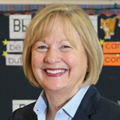
Debbie Miller is an experienced teacher, author, and literacy consultant who now works in schools across the United States and Canada. She is known for her work in the field of comprehension instruction, particularly in its application for children in the primary grades.

Fanny Passeport is the Founder of No Borders Learning that serves PK-12 schools, educators, and families in co-constructing healthy learning ecosystems that attend to the heart, exercise the mind and engage the willpower. She is also a postgraduate student at the University of Dundee and has +11 years of experience in PK-12 international schools. Fanny is currently working as an Education Development Officer with the radical innovation unit called ErasmusX (Erasmus University Rotterdam). She is a published author and an award-winning educator.

Erik M. Francis, M.Ed., M.S., is an international author, educator, presenter, and professional development provider with over 25 years of experience working in education. He is the author of Deconstructing Depth of Knowledge: A Method and Model for Deeper Teaching and Learning published by Solution Tree and Now That’s a Good Question! How to Promote Cognitive Rigor Through Classroom Questioning published by ASCD. He is consistently ranked as one of the World Top 30 Education Professionals by the international research organization Global Gurus.

With a professional teaching and leadership background in both the private and public international schools (IB PYP Educator & PYP Coordinator), Jessica brings a unique perspective to her role as Enrichment & Environment Coordinator at the school in Austin, Texas.

Donna Guerin is the Founder and CEO of Global Lighthouse Studios, an international educational NGO that provides project based learning through the lens of music and the arts. Donna has been a classroom teacher for 24 years and has been involved in global education for eight years.

Kathleen Naglee is an award-winning educational leader advising national systems, individual schools, international projects, ed-tech start-ups and early career leaders. She specializes in visionary projects on the future of learning.

Cathryn Berger Kaye, M.A., founder of CBK Associates, is an international education consultant, who gladly shares her expertise on service learning, effective approaches to teaching and learning, dynamic advisory programs, organizational development, innovative curriculum design, and social and emotional development to schools, universities and organizations worldwide. She is known for her engaging style of presentation whether during a conference keynote, a multi-day education institute, or on-site school workshop always providing theoretical frameworks with practical applications.

Maureen Connolly, Ed.D. is an Associate Professor of Education at The College of New Jersey and consultant for CBK Associates. Her expertise includes service learning, curriculum development, literacy, standards, and assessment. She is the author of four books including Adaptable Teaching: 30 Practical Strategies for All School Contexts, the first in the Building Your Teaching Toolbox series written with Jonathan Ryan Davis. Maureen taught high school for 15 years and coordinated a service learning program for the New York Metropolitan area before moving into higher education.

Damian Cooper is an independent education consultant who specializes in helping schools and school districts improve their instructional and assessment skills. In his varied career,Damian has been a secondary English, Special Education, and Drama teacher, a department head, a librarian, a school consultant, and a curriculum developer.

Ken (He/Him/His) currently holds an M.A. in Education with a specialization in Educational Technology as well as New Media Design and Production. He has worked as an Educator for over 20 years and spent most of his classroom experience teaching technology at the Middle School level. As a part of his active involvement within the Educational Technology community, Ken is an Apple Distinguished Educator, a Microsoft Innovative Educator Expert, and a Google Certified Innovator.

Jodi is an educational facilitator and integrator who loves to co-create healthy culture that nurtures myriad authentic relationships. She is particularly skilled at inspiring practical application, collective leadership, and holistic transformations (big and small), which is evidenced in her work with senior executives, program directors, teachers, families, and children. The experiences that most profoundly shape her work include: 26 years teaching (preschool, primary, tertiary), documentation team lead while teaching preschool, studio arts.

Clare Landrigan is a staff developer who is still a teacher at heart. After years serving as an educator and administrator in elementary public schools, she is now a literacy consultant, spending her days partnering with school systems to implement best practices in the field of literacy. She believes that effective professional development includes side-by-side teaching, analysis of student work, mutual trust, respect, and a good dose of laughter.

Hannah Schneewind has been a teacher, adjunct professor, curriculum writer, keynote speaker and national literacy consultant. She works in schools and presents at conferences across the United States to support teachers in developing high quality, effective literacy instruction that centers students. She is the co-author of Trusting Readers: Powerful Practices for Independent Reading (Heinemann, 2021). She frequently writes and speaks about the importance of teaching the reader and teaching reading skills and strategies. Hannah began her career as a first grade teacher in Brooklyn, New York, and she lives with her family in Westport, CT.

Dr. Jennifer Scoggin has been a teacher, author, speaker, curriculum writer, and literacy consultant. Jennifer’s interest in the evolving identities of both students and teachers and her interest in children's literature informs her work. Jen began her career teaching first and second grades in Harlem, New York. In her current role as a literacy consultant, Jennifer collaborates with teachers to create engaging literacy opportunities for children. She holds a doctorate in curriculum and instruction from Teachers College, Columbia University and is the co-author of Trusting Readers: Powerful Practices for Independent Reading (Heinemann, 2021). She lives with her family and her dog in Guildford, CT.

Calder Cheverie is a non-binary artist, lands-based educator and filmmaker. They teach (W)holistic Approaches to Teaching & Learning in the Faculty of Education at Simon Fraser University and are the Storywork Coordinator for Skwxwú7mesh Nation’s Language & Culture department. Calder is completing a doctorate in Arts Education at Simon Fraser. Their research focuses on creating circles of kinship in curriculum design and artistic pathways toward the ethical embodiment of two-eyed seeing in pedagogical practice. Calder holds an M.Ed. in Nature-Based & Place-Conscious Practices and a GDE in Indigenous Education.

Dr. Judy Halbert and Dr. Linda Kaser are the co-directors of the Networks of Inquiry and Indigenous Education (noiie.ca) and are faculty members at the University of British Columbia where they lead the Transformative Educational Leadership Program. (telp.educ.ubc.ca)
Linda and Judy have served as teachers, principals, district leaders and policy advisors with British Columbia’s Ministry of Education. They have consulted extensively with school systems internationally.

Dr. Judy Halbert and Dr. Linda Kaser are the co-directors of the Networks of Inquiry and Indigenous Education (noiie.ca) and are faculty members at the University of British Columbia where they lead the Transformative Educational Leadership Program. (telp.educ.ubc.ca)
Linda and Judy have served as teachers, principals, district leaders and policy advisors with British Columbia’s Ministry of Education. They have consulted extensively with school systems internationally.

Born in Canada to a diverse, cross-cultural family, Alice is a parent, teacher, Vice-Principal and global learner of Nêhiyaw (Cree) and Igbo ancestry. She has taught in public, private and international schools in Canada, Hong Kong, Japan and Switzerland. Alice believes in emboldening and inspiring learners to continually spark their curiosity through hopeful, challenging inquiry and action so that, together, we can positively transform our world.

Jason Ablin (@JasonAblin) is the author of The Gender Equation in Schools: How to create equity and fairness for all students. He has served as a teacher, department chair, principal, and head of school. He holds national certification in leadership coaching and mentoring from the National Association of School Principals and has been supporting and mentoring new leaders throughout the country for over ten years.

Currently an Associate Professor of Literacy, Language, and Culture at the University of Illinois at Chicago, Dr. Gholnecsar (Gholdy) Muhammad is a leader who strives to shape the national conversation for educating youth that have been underserved.

Kailyn Fullerton (she/her) is a consultant and collaborator who endeavours to use the transformative potential of social-emotional learning (SEL) to support educators, leaders, parents and students in their journey towards holistic and systemic wellbeing. She speaks, writes and offers training about SEL and mindfulness internationally.

Meet Holly, a passionate educator and digital learning pioneer who has made significant contributions to the field of educational technology. With over 25 years of rich experience, Holly is not only an international speaker and a bestselling author but also an influential advocate for technology-infused education. She was one of the first teachers to have a 1:1 classroom (1999-2000) in the country and has dedicated her career to equipping educators globally with blended learning strategies. Holly's insightful work has made her a trusted authority for those keen to upgrade their teaching techniques through technology.

Sara K. Ahmed serves as the Director of Curriculum Integration and Innovation at Catherine Cook School in Chicago. She has taught and coached in public and private, local, and international schools, where her classrooms were designed to help students examine their own identities and see the humanity in others. When she is not in the classroom or meeting with teachers, you can find her coaching the soccer/football teams at school.

My name is Amparo Serra and I am here to tell you my story. I am 41 years old and I consider myself a person who is passionate about life. We only have one life and that's why we have to try to be the best version of ourselves. I wake up every morning with renewed energy and ready to create a smile and transmit positivity in every person I come across. My colleagues tell me that my smile doesn't fade, but I am happy and I have everything I need. A wonderful family, health and a job that I love.
- Dr. Virginia Pauline Rojas
New Dates to be announced
Effective collaboration requires us to embrace a new way of working to push past the traditional roles and responsibilities of content and language teachers of multilingual learners.

The Intensive Instructional Coaching Institute is a focused and intensive professional development opportunity based on 20+ years of research. It provides a big-picture view of instructional coaching and includes an exhaustive learning opportunity covering five coaching areas presented in Jim Knight’s bestselling books and research.
- Dr. Lucy Hoi Yin Wong
20th April 2024
This particular workshop will inquiry with educators in the area of implementing play-based learning in additional language classroom from K-2 from potential to practice.
- Dr. Virginia Pauline Rojas
23rd, 25th, 30th April & 2nd May 2024
Two past paradigms in EAL account for the historical practice of English-only policies and practices in schools: (1) it was believed that ‘more and only’ English was the quickest path to English-language acquisition and (2) deficit-thinking positioned students learning English as needing to be ‘fixed’ as quickly as possible with the solution being the enforcement of English-only policies and practices.
- Dr. Lucy Hoi Yin Wong
28th April 2024
The integration of literacy text into student inquiry is an indicator of a good practice in an inquiry-based additional language classroom. For example, a story book as part of a unit of inquiry with a particular social studies emphasis to support students conceptual understanding of the unit of inquiry.
- Jay McTighe
3rd & 4th May 2024, Doha
For twenty-five years, the award-wining Understanding by Design® framework has been used world-wide to develop effective and engaging curriculum. Join UbD co-author, Jay McTighe, to explore a set of key educational questions: What is understanding and how does it differ from “knowing”?
- Kath Murdoch
11th & 12th May 2024, Shanghai
In the inquiry classroom, we aim to nurture learners who see themselves as capable, curious, resourceful individuals with a strong sense of agency. There is growing evidence of the importance of nurturing the kinds of dispositions and skills associated with agency.
- Carol Ann Tomlinson
3rd, 10th, 17th, 24th September 2024
This four-session workshop is designed to guide teachers in understanding and planning for effective differentiated instruction in their classrooms. Each session will balance the need to understand the "whys" of differentiation with the need to act on the "hows" and "whats" of differentiation.
- Dr Ron Ritchhart
13th & 14th September 2024, Doha
The Worldwide Cultures of Thinking Project at Harvard Project Zero has been investigating what it takes to build school and classroom cultures rich in thinking for over two decades. This research has informed the work of schools, museums, families, and organizations around the world.
- Dr Heidi Hayes Jacobs
16th, 23rd, 30th September 2024
How can we create a living breathing curriculum responsive to the learners in our care? How can support a culture of collaboration between teachers to develop a pathway of engaging learning experiences both vertically and across the school year?
- Clare Landrigan
17th, 24th September, 1st & 8th October 2024
Every child deserves the opportunity to become a lifelong reader, and books are the teacher’s tool to make that happen. This course will show you how to redesign your book spaces, reorganize your books, and reimagine how these spaces can work together across the entire school to make each teacher’s book supply seem endless in the eyes of a reader.
- Kailyn Fullerton
18th, 25th September, 2nd, & 9th October 2024
Connection before content. As educators, we know that when our students feel safe, seen and inspired that learning naturally follows. However, with so many curricular expectations on our plate, it can feel overwhelming to consider how to fit in the intentional instruction of social-emotional competencies.
- Dr Ron Ritchhart
5th & 6th October 2024, Barcelona
The Worldwide Cultures of Thinking Project at Harvard Project Zero has been investigating what it takes to build school and classroom cultures rich in thinking for over two decades. This research has informed the work of schools, museums, families, and organizations around the world.
In this four-part webinar series, Carl Anderson will discuss methods and strategies that will help you get better at key aspects of writing instruction. You’ll learn about these four aspects of teaching writing, each of which is essential for helping your students grow as writers: Setting assessment-based writing goals for students.
- Carol Ann Tomlinson
9th, 16th, 23rd & 30th October 2024
While there is a great deal of conversation in schools about formative assessment, it is relatively rare to see it implemented in classrooms as it ought to be if the goal is to improve teaching and learning. This 4-part webinar will explore formative assessment as a powerful tool that, when used correctly, enhances student achievement, professionalizes teachers, improves instruction, and builds student agency.
- Kath Murdoch
10th, 23rd October, 7th, 20th November 2024
There has been growing interest in 'personalized learning' for many years now. Increasingly, schools are making arrangements to provide more opportunities for learners to learn to be self-directed and to have their needs and interests met through the curriculum.
- Dr. Heidi Hayes Jacobs
10th, 17th, 24th October 2024
How can leaders directly improve the conditions for teaching and learning? We have a genuine opportunity to reconsider format decisions in our schools to address new challenges and open possibilities regarding the structural ecosystem. There are four program structures can be designed to work together providing opportunities for responsive curriculum.
- Mark Church
19th & 20th October 2024, Shanghai
Over the last decade there has been an explosion of interest in how teachers can best build a culture of thinking in their classrooms, nurture students as powerful thinkers and learners, and foster student engagement. Within the busy pace and high demands of schools, it seems even more important that these goals do not get lost.
- Dr. Heidi Hayes Jacobs
7th & 14th November 2024
How can we streamline a bloated curriculum that piles relentless demands on teachers and students? This workshop will address not only the problem but a process for determining what to cut out, cut back, consolidate and create in your school setting K-12.
- Jim Knight
20th - 24th November 2024, Singapore
The Intensive Instructional Coaching Institute is a focused and intensive professional development opportunity based on 20+ years of research. It provides a big-picture view of instructional coaching and includes an exhaustive learning opportunity covering five coaching areas presented in Jim Knight’s bestselling books and research.
Trevor MacKenzie deepens our understanding of assessment with a lens on supporting learners in understanding where they are in their learning and where they need to go next in their learning. Mr. MacKenzie is an educator in British Columbia, Canada, who teaches in a public school system world renowned for its rich formative assessment practice and competency focused standards.
- Carol Ann Tomlinson
15th, 22nd, 29th January & 5th February 2025
When we think of “inclusion,” that most often refers to general education classrooms that make provisions to include a few learners with special needs. In those instances, it’s easy for think of the classroom as composed largely of “regular” or “normal” students who are joined by learners who aren’t “regular” or “normal.”
- Kath Murdoch
4th, 18th February 4th, 18th March 2025
Critical to the success of any journey of inquiry is the degree to which the learner is able to both access information and process and communicate ideas. As we inquire, most of the information we encounter is in the form of some kind of text.
The Intensive Instructional Coaching Institute is a focused and intensive professional development opportunity based on 20+ years of research. It provides a big-picture view of instructional coaching and includes an exhaustive learning opportunity covering five coaching areas presented in Jim Knight’s bestselling books and research.
- Dr. Virginia Pauline Rojas
21st & 22nd February 2025, Doha
The aim of this two-day workshop is three-fold: (1) to look at the ways in which translanguaging pedagogy scaffolds learners’ academic achievement and second language acquisition; (2) to provide specific translanguaging tools to be used so multilingual learners can do what previously was thought they could not do in classrooms; and (3) to discuss the use of translanguaging within the context of ten content and language integrated learning (CLIL) principles.
- Dr. Virginia Pauline Rojas
1st & 2nd March 2025, Shanghai
The aim of this two-day workshop is three-fold: (1) to look at the ways in which translanguaging pedagogy scaffolds learners’ academic achievement and second language acquisition; (2) to provide specific translanguaging tools to be used so multilingual learners can do what previously was thought they could not do in classrooms; and (3) to discuss the use of translanguaging within the context of ten content and language integrated learning (CLIL) principles.
- Zaretta Hammond
8th & 9th March 2025, Bangkok
How do we leverage culturally responsive teaching to increase a sense of belonging in the academic community of learners for all students? To ensure all students, especially those historically marginalized, are ready to learn deeply, we have to help students not only feel a sense of belonging on a social level but also have a sense they belong to the academic community.


